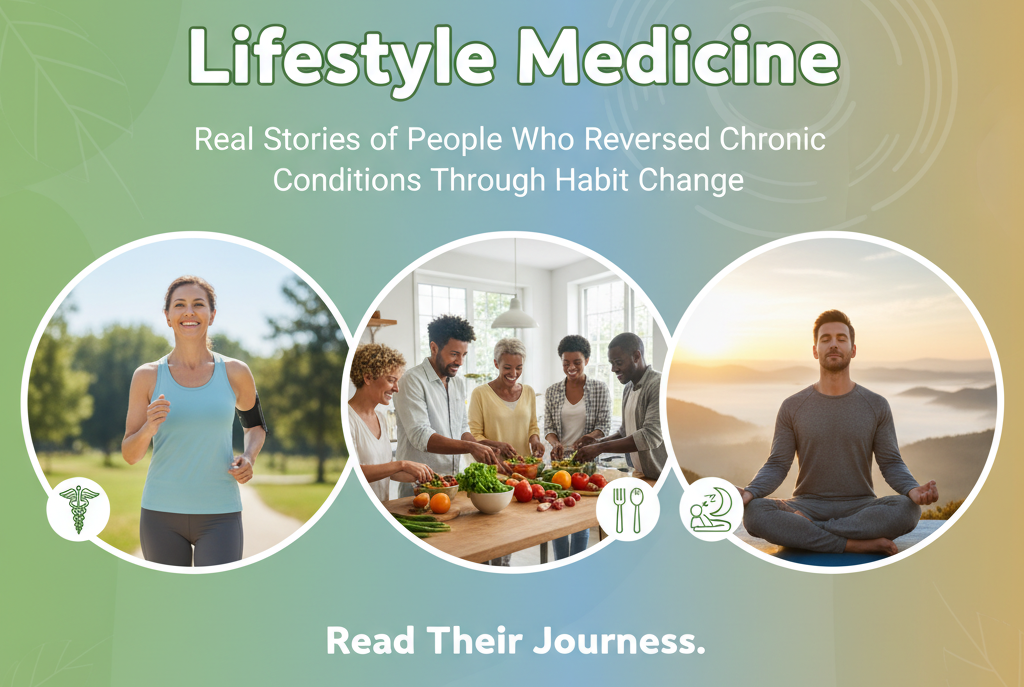
Lifestyle diseases are often spoken about as if they are a life sentence. Once diabetes, always diabetes. Once PCOS, always PCOS. Once blood pressure starts, it never ends. But stories from real people tell a very different side — that the body is capable of change when life around it changes. Lifestyle medicine does not rely on crash plans or overnight fixes. It focuses on small, repeated habits that slowly shift the body back into balance. The stories below are of ordinary people in India who made consistent lifestyle changes and saw their chronic conditions settle, reduce and in some cases, go into remission.
What Lifestyle Medicine Really Means (In Daily Life Terms)
Lifestyle medicine is often misunderstood as “eat healthy and exercise”. In reality, it is a structured, evidence-based approach that focuses on six daily pillars — food choices, physical movement, sleep, emotional stress, harmful substances, and social connection. These are not short-term challenges; they are changes in how someone lives day to day. And when the inputs change, the symptoms most people spend years fighting with tablets can start softening on their own.
Story 1 — Diabetes Turned Around by Rewriting the Plate
Anil, 47, Pune
Anil was a corporate manager whose day was built around chai with sugar, late dinners, and long sitting hours. When his fasting sugar crossed the prediabetic mark and his doctor advised medication, something shifted. He decided to try lifestyle correction before adding pills.
He started with one rule — “no refined sugar at home”. That alone dropped two teaspoons from his tea plus sweets after meals. Next came a 20-minute after-dinner walk with his wife. A month later, he pushed dinner earlier to 8 pm and added a bowl of salad before rice. These were not extreme changes, but they were repeated daily. Within months, his energy was higher in the morning, his weight began dropping, and sugar levels that were climbing every quarter finally started settling.
His doctor still monitors him, but medication stayed on hold — not because of luck, but because the raw inputs changed.
Story 2 — High Blood Pressure Eased by Rewriting the Day
Meera, 52, Nashik
Meera was not overweight, she did not drink or smoke, and yet her blood pressure readings kept climbing. Her doctor asked about sleep. For 12 years, she slept past midnight scrolling and worrying. She also lived alone and rarely spoke to anyone through the week.
Her first lifestyle change was not exercise — it was companionship. She joined a women’s morning laughter and walk group in her colony. This one shift changed two things without willpower: she began walking 30–40 minutes every day, and she started her mornings with conversation and laughter instead of silence.
Two months later, she committed to screen-off by 10:30 pm and lights-off by 11 pm. That one sleep change flattened her morning anxiety spikes. Her BP readings, which once needed two tablets, now held steady on a lower dose. She did not “fix BP” — she removed the daily stressors that kept pushing it up.
Story 3 — PCOS Stabilised with Slow, Boring Discipline
Riya, 28, Bengaluru
Riya tried every diet that claimed to “fix PCOS fast”. Keto, juice cleanse, intermittent fasting without guidance — every trial ended in rebound eating and guilt. What finally worked was the opposite — slow and boring.
Her nutritionist asked her to do just three things for 12 weeks:
- Protein with every meal (curd, paneer, dal, eggs depending on day)
- 30 minutes of strength training 3–4 days a week
- A fixed sleep window: bed by 11 pm, wake at 7 am
The first few weeks were not dramatic. But by the third month, her cycles began appearing on time, skin breakouts reduced and she no longer needed afternoon naps. The improvement did not come from perfection; it came from consistency that did not burn her out.
What These Stories Quietly Have in Common
When you look past the surface, every story shares the same pattern:
- Change was small but daily — not extreme
- Habits were built, not sprinted
- There was some form of support — group, spouse, coach or doctor
- Sleep and stress were corrected before fancy supplements
- Food changes were rooted in routine, not restriction
- Progress took months, not weeks
Most people fail not because change is impossible, but because they expect microwave-speed results from body systems that heal slowly.
Can Everyone Reverse Chronic Illness with Lifestyle Change?
Not always — and not fully in every case. Some conditions need medicine alongside habits. Some reach a stage where reversal is unrealistic but control is very much possible. What is clear from patient outcomes across clinics is this: medicines control disease, but lifestyle lowers the need for medicines. It is not an either/or — it is a both-together approach, supervised when needed.
If You Want to Start, Start Small — A Beginner Roadmap
You don’t need a 3-month plan to begin. You need one or two decisions you can repeat daily without quitting.
Try any two from below and hold them for 30 days:
- Walk 20–30 minutes after one meal every day
- Move dinner before 8:30 pm on weekdays
- Remove visible sugar at home
- No screens 45 minutes before bed
- Strength training twice a week
- Keep one “stress release practice” — journal, prayer, breathwork, or call someone
- Replace packaged snacks with fruit, curd, chana, or nuts on working days
If these sound too simple, remember: disease rarely came from one dramatic event — it came from daily inputs. And so does recovery.
When to Involve a Professional
Lifestyle medicine is safe to begin on your own, but not in every situation. Seek expert guidance when:
- Numbers are rising rapidly despite changes
- You already take medicines for BP, thyroid or sugar and want to taper safely
- Symptoms interfere with daily functioning
- You have a history of emotional eating, binge patterns or severe weight swings
- You’re unsure which habits matter for your specific condition
Professional help does not replace self-effort — it improves direction and safety.
Final Word
The body is not stubborn — our habits are. When daily life becomes less inflammatory, less rushed, less irregular, the body quietly begins repairing itself. These stories are proof that change is not reserved for people with perfect discipline or gym memberships. It belongs to anyone willing to choose small, again and again.
Lifestyle medicine is not about living like a monk. It is about removing the routines that keep the disease alive — and replacing them with routines that let the body do what it is built to do: heal.